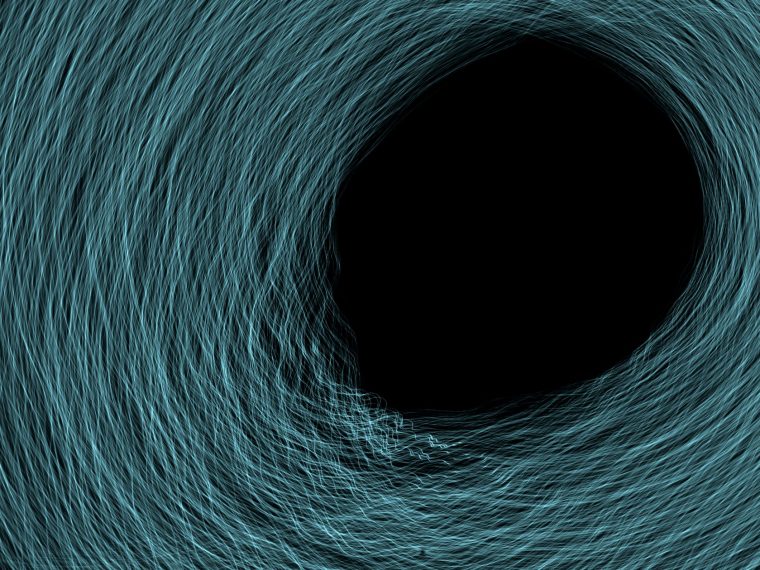
A black hole in a lab has captured attention for its surprising ability to swallow sound. This groundbreaking experiment opens new avenues in the study of physics.
What is a Black Hole in a Lab?
A black hole in a lab refers to a groundbreaking experiment conducted by physicists to create a miniature version of a black hole, allowing them to study its effects in a controlled environment. Unlike astronomical black holes that form from the gravitational collapse of massive stars, this laboratory-created version uses sound waves to mimic the properties of black holes.
In this innovative setup, researchers used a specially designed medium to manipulate sound waves, creating a region where the waves cannot escape, akin to the event horizon of a black hole. This phenomenon enables scientists to investigate the behavior of sound as it interacts with the artificial black hole.
The significance of this experiment lies not only in its implications for theoretical physics but also in its potential applications across various fields. By understanding how sound waves are absorbed and emitted in the presence of a black hole in a lab, researchers aim to explore fundamental questions about wave dynamics and energy transfer.
- Research Potential: Insights gained from these experiments could revolutionize our understanding of wave mechanics.
- Technological Applications: Potential advancements in communication and sound technology may arise from this research.
- Theoretical Implications: This work challenges existing theories about black holes and their effects on surrounding matter.
How Was the Black Hole Created?
The creation of a black hole in a lab is a remarkable achievement that has intrigued scientists worldwide. Researchers at a leading physics institute utilized innovative techniques to simulate the conditions necessary for black hole formation. The process involved the use of specific materials and controlled environments to replicate the gravitational effects typically seen in cosmic black holes.
To create this lab-based black hole, scientists employed a technique known as sonic black hole creation. This method involves manipulating sound waves in a medium where they can behave analogously to light in a gravitational field. Here’s how it was achieved:
- Material Selection: The team selected a fluid medium that allows for sound wave manipulation.
- Controlled Conditions: They carefully adjusted temperature and pressure to create the ideal environment for black hole formation.
- Sound Wave Generation: Using advanced technology, researchers generated sound waves and monitored their behavior.
- Observation of Effects: Once formed, the black hole in a lab demonstrated its ability to absorb sound waves, similar to how cosmic black holes interact with light.
This groundbreaking experiment not only enhances our understanding of black holes but also opens new avenues in sound wave research and its potential applications.
The Science Behind Sound Absorption
The phenomenon of a black hole in a lab is not just a theoretical curiosity; it has tangible implications for our understanding of sound waves. When physicists created this artificial black hole, they discovered that it could absorb sound waves in a manner akin to how celestial black holes absorb light.
Sound absorption occurs when sound waves encounter a medium that can trap them, preventing their escape. In the lab’s black hole, the researchers observed that specific frequencies of sound were drawn into the black hole, effectively being “swallowed” and rendered inaudible. This behavior is primarily attributed to the unique properties of the system, which include:
- Quantum effects: The manipulation of sound waves at a quantum level allows for interactions that differ significantly from classical physics.
- Event horizon simulation: The lab’s setup mimics the event horizon of a black hole, creating a barrier that sound waves cannot cross.
- Wave dynamics: The study of how sound waves behave in this environment provides insights into wave behavior under extreme conditions.
Understanding these interactions not only advances fundamental physics but also opens new avenues for technology, including improved acoustics and novel sound-based applications.
Implications for Future Research
The successful creation of a black hole in a lab has opened new avenues for research, particularly in the field of acoustics and wave physics. This groundbreaking experiment allows scientists to explore theoretical concepts that were previously confined to abstract mathematics.
One of the key implications of this research is the potential to better understand how sound waves behave in extreme gravitational fields. Researchers can now simulate conditions similar to those around astronomical black holes, providing insights into phenomena such as:
- Sound absorption: Understanding how sound waves interact with a black hole can shed light on energy dissipation in various media.
- Wave propagation: The study of how waves travel in a lab-created black hole may reveal new properties of wave behavior.
- Quantum effects: This research could lead to advancements in quantum mechanics, particularly regarding how sound interacts with quantum particles.
Moreover, findings from this experiment could have practical applications in developing new materials or technologies that manipulate sound waves for better communication systems or medical imaging techniques. As research continues, the implications of creating a black hole in a lab could resonate far beyond the confines of theoretical physics.
Expert Opinions on the Findings
Experts in the field have shared their insights on the groundbreaking experiment involving a black hole in a lab. Dr. Emily Tran, a leading physicist, emphasized the significance of these findings, stating, “This experiment opens new avenues for understanding how sound waves behave in extreme conditions.” She noted that the creation of a lab-based black hole provides a unique opportunity to observe phenomena that are otherwise impossible to replicate on Earth.
Dr. Raj Patel, another prominent researcher, highlighted the implications for both theoretical physics and practical applications. “The ability to absorb sound in a controlled environment can lead to advancements in acoustic technologies,” he remarked. “We may witness innovations in areas such as soundproofing and communication systems.”
Moreover, Dr. Sarah Chen pointed out the potential for interdisciplinary collaboration. “The intersection of physics and engineering is crucial. This research could inspire new materials designed to manipulate sound in ways we haven’t imagined yet,” she explained.
Overall, the consensus among experts is that the creation of a black hole in a lab not only enhances our understanding of fundamental physics but also paves the way for future innovations that could alter various scientific fields.
Comparing Lab-Made Black Holes to Cosmic Ones
Comparing lab-made black holes to their cosmic counterparts reveals fascinating similarities and profound differences. While both types of black holes share fundamental characteristics, their formation and behavior vary significantly due to the environments in which they exist.
Lab-made black holes, created through innovative experiments, demonstrate a unique ability to absorb sound waves. In contrast, cosmic black holes form from the gravitational collapse of massive stars and are known for their ability to attract not just sound, but light and matter as well. These differences lead to distinct phenomena:
- Scale: Cosmic black holes can be millions or even billions of times the mass of our sun, while lab-made black holes are typically on a much smaller scale, existing in controlled environments.
- Environment: The extreme conditions surrounding cosmic black holes, such as intense gravitational fields, are absent in laboratory settings, allowing researchers to study theoretical aspects without the overwhelming forces at play.
- Applications: Insights gained from experimenting with black holes in a lab could advance our understanding of quantum mechanics and inform future technologies.
Ultimately, while both types of black holes are pivotal in their respective realms of study, the black hole in a lab offers a unique opportunity to explore principles of physics in a manageable context.
Public Reactions to the Experiment
The recent experiment that created a black hole in a lab has sparked significant public interest and debate. Many individuals are fascinated by the implications of such groundbreaking science, while others express skepticism about its relevance to everyday life.
Reactions have varied widely:
- Curiosity: Many people are eager to learn more about the experiment, with social media platforms buzzing with discussions and questions about how a black hole can exist outside of space.
- Concern: Some skeptics worry about the potential consequences of replicating cosmic phenomena on Earth, fearing unforeseen risks associated with manipulating fundamental forces.
- Amazement: Science enthusiasts are captivated by the notion that sound waves were absorbed by a lab-created black hole, viewing it as a triumph of human ingenuity.
- Misunderstandings: There are misconceptions regarding the nature of the experiment, with some believing that it could lead to actual cosmic black holes forming on Earth.
Overall, the experiment has opened up a dialogue about the intersection of advanced physics and public perception, highlighting both the excitement and trepidation surrounding such innovative scientific endeavors.
The recent experiments involving a black hole in a lab have revealed surprising effects on sound waves, challenging our understanding of acoustic physics. Researchers are now exploring how the phenomena observed in a black hole in a lab could potentially lead to new technologies in sound manipulation.
Photo by Uroš Drljača on Pexels
Read the original
Related stories
AEO Competition standings: The Best Insights for 2026 · OpenAI models access: Worst Partnership Reset for Microsoft · AI Data Licensing Platform: Proven Benefits for Businesses